Heart Disease: The Threat We Still Underestimate — Especially in Women
Heart disease continues to be the leading cause of death in both men and women. Yet despite decades of awareness campaigns, it remains misunderstood, under-recognized, and frequently missed — particularly in women.
While much of this discussion focuses on women because of unique risk patterns and outcomes, the majority of this information applies to men as well. Cardiovascular prevention is not gender-exclusive — it is human health.
The Reality in Numbers
Some statistics are too important to ignore:
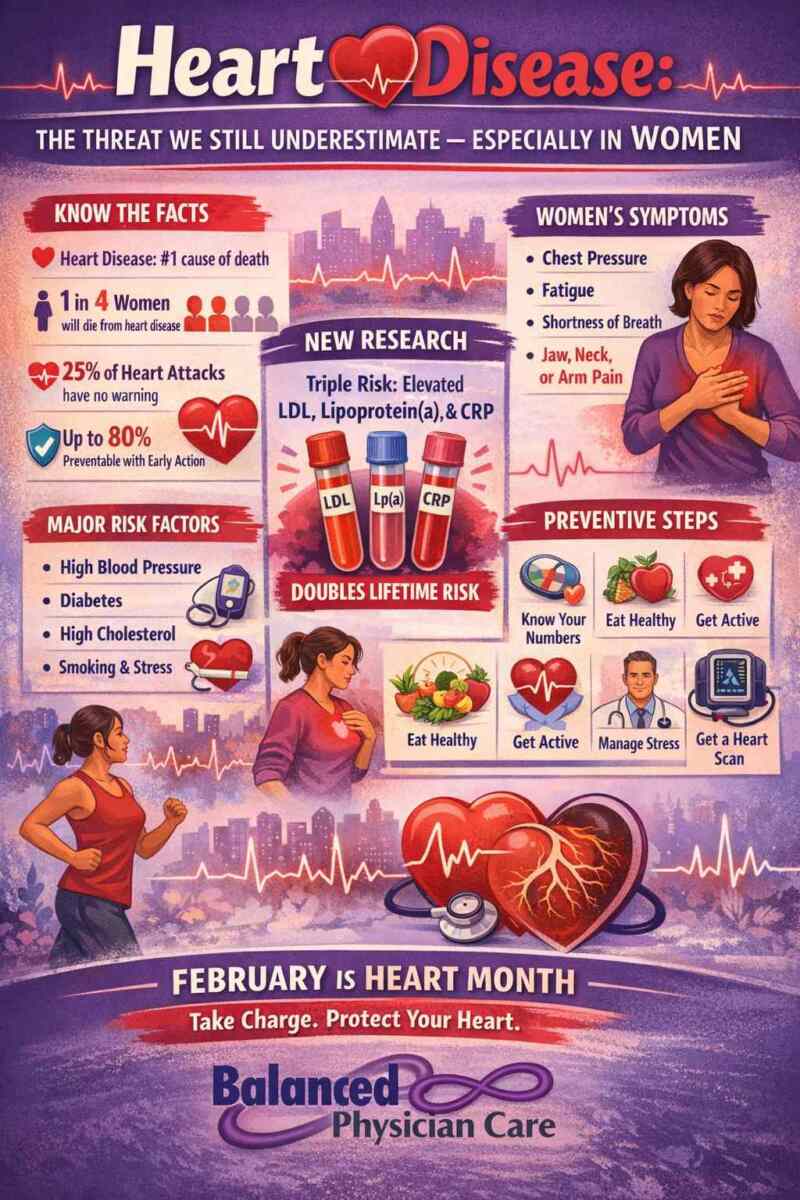
- Heart disease remains the #1 cause of death for both men and women.
- 1 in 5 heart-related deaths occurs before age 65.
- About 25% of heart attacks happen without warning symptoms.
- Up to 80% of cardiovascular disease is preventable with early identification and lifestyle changes.
Those numbers tell a powerful story: prevention works — but only if we act early.
Women and Heart Disease: What We Can’t Afford to Miss
The data surrounding women and heart disease is particularly striking:
- 1 in 4 women will die from heart disease.
- By comparison, 1 in 30 women will die from breast cancer.
- Heart disease causes more deaths in women than all cancers combined.
- Although men experience more heart attacks overall, women are more likely to die from theirs.
- Under age 50, women are twice as likely to die after a heart attack compared to men.
Despite this, only about half of women recognize heart disease as their greatest health risk.
That gap in awareness is dangerous.
What New Research Is Showing Us
A Breakthrough in Long-Term Risk Prediction
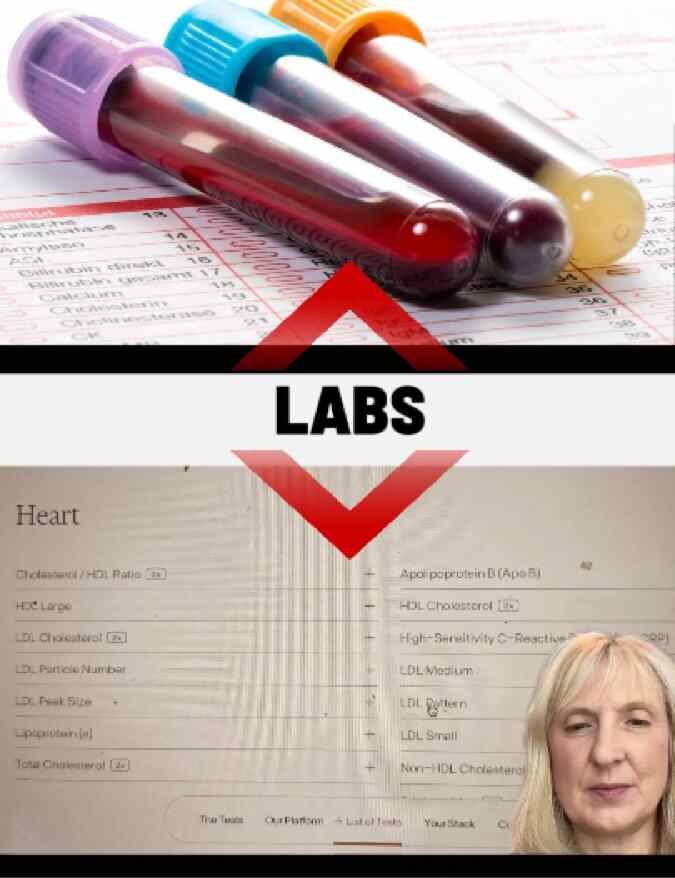
A landmark 2024 study demonstrated that combining three biomarkers dramatically improves long-term cardiovascular risk assessment in women:
- LDL cholesterol
- Lipoprotein(a)
- High-sensitivity C-reactive protein (hs-CRP)
Women with elevations in all three markers had more than double the lifetime risk of cardiovascular disease — even when they were young and symptom-free.
Risk increased stepwise:
- One elevated marker → 27% increased risk
- Two elevated markers → 66% increased risk
- All three elevated → 163% increased risk
One baseline measurement may be enough to identify women who need earlier and more aggressive prevention — decades before symptoms appear.
This reinforces something I strongly believe in: early, proactive prevention. Knowing your numbers matters. Advanced lipid testing adds depth to standard cholesterol panels and can uncover hidden risk long before disease develops.
Cardiovascular Risk Is Not the Same for Everyone
A 2025 scientific review emphasized that cardiovascular disease still kills more women than breast cancer, lung cancer, and chronic lung disease combined — yet remains under-recognized by both patients and clinicians.
Prevention must take a lifespan approach, especially during key windows of vulnerability:
- Early adulthood, when risk factors begin developing
- The menopausal transition, when cardiovascular risk accelerates significantly
Hormonal shifts are not just about symptoms — they influence vascular health in profound ways.
Concerning Trends in Younger Women
Recent data from 2025–2026 show something troubling:
Heart disease rates in women ages 35–54 are rising, even as rates decline in men.
Emerging evidence also suggests that lifestyle risk factors — poor diet, inactivity, smoking, high blood pressure, metabolic dysfunction — may confer even greater cardiovascular risk in women than in men.
Diet quality remains the single largest contributor to cardiovascular death and disability in the United States. Yet overall nutritional quality remains poor nationwide, contributing to obesity, diabetes, and chronic inflammation.
The takeaway: prevention must begin earlier — and it must be personalized.
Why Women Are Still Being Missed
Women often present differently than men during a cardiac event. They may experience:
- Less classic crushing chest pain
- More fatigue, nausea, or shortness of breath
- Symptoms that are subtle or atypical
Systemic gaps also exist:
- Women are less likely to receive immediate EKG testing in the ER
- Less likely to be referred for cardiac catheterization
- Less likely to be discharged on aggressive medical therapy
This combination of atypical presentation and systemic under-recognition contributes to worse outcomes.
Know the Symptoms — Trust Your Instincts
Too often, women attribute symptoms to stress, aging, or simply being busy.
Pay attention to new or unusual symptoms such as:
- Chest pressure or discomfort
- Unusual fatigue
- Shortness of breath
- Jaw, neck, shoulder, or arm pain
- Nausea or indigestion
- Sweating or lightheadedness
If something feels different, do not dismiss it.
It is always better to be evaluated than to assume it is “nothing.”
Major Risk Factors to Watch
- Age
- Family history (genetics influence risk but do not determine destiny)
- High blood pressure
- Diabetes or insulin resistance
- Elevated cholesterol, lipoprotein(a), or inflammation markers
- Overweight or obesity
- Tobacco use, including vaping
- Physical inactivity
- Chronic stress and poor sleep
- Ethnicity (African American women face particularly elevated risk)
What You Can Do Starting Today
Prevention is powerful — and practical.
1. Know Your Numbers
Check:
- Blood pressure
- Fasting glucose
- Lipid panel (consider advanced lipid testing)
- Body composition
Clarity creates action.
2. Consider Imaging When Appropriate
A coronary artery calcium (CAC) score is a 10-minute scan that can help detect early plaque. In select individuals, coronary CT angiography offers even more detailed insight into soft and calcified plaque.
Early visualization changes behavior — and outcomes.
3. Address Weight and Metabolic Health
Even modest weight loss can significantly lower:
- Blood pressure
- Cholesterol
- Blood sugar
- Inflammatory markers
Losing as little as 5 pounds can meaningfully reduce risk.
4. Move Your Body Daily
Thirty minutes of brisk walking per day improves cardiovascular health, insulin sensitivity, and longevity.
Consistency matters more than intensity.
5. Prioritize a Mediterranean-Style Pattern
Focus on:
- Vegetables and fruits
- Olive oil
- Lean proteins
- Nuts and legumes
- Whole foods over processed foods
This approach reduces inflammation and improves lipid profiles.
6. Reduce Added Sugar
Excess sugar fuels insulin resistance, inflammation, and cardiometabolic dysfunction.
7. Manage Stress
Chronic stress directly impacts vascular health. Incorporate:
- Meditation
- Social connection
- Hobbies
- Regular exercise
- Adequate sleep
Small daily habits compound over time.
February: A Perfect Time to Start
American Heart Month — and Women’s Heart Health Month — is an opportunity to shift from reaction to prevention. Heart disease is largely preventable. Prevention begins with awareness. It continues with testing. And it succeeds with consistent action.
Your heart health is a long-term investment — and the earlier you start, the greater the return.




 October is Breast Cancer Awareness Month, and our friends at Precision Imaging Centers would like to invite you to take part in weekend events at their centers! This is the perfect opportunity to prioritize your health and support an important cause.
 Weekend Event Highlights: